


Over the past year, we’ve tested and reviewed over 50 hearing aids across every price point. In this guide, we’ll narrow our focus to the products that deliver exceptional value for their price.
Hearing aids range in price from $300 to $7,000 per pair. With such a wide price range, many people wonder: what are the best affordable hearing aids that still deliver quality?
Because everyone’s definition of “affordable” is different, we’ve included hearing aids priced from $399 - $1,000 per pair. We evaluated several products under $399 but found they didn’t meet the criteria for this guide (see the full list of brands considered below).
To make things easier, we’ve organized the guide by price point—so as you scroll, you’ll see options at the lower end of the spectrum first, followed by slightly more expensive choices.
Let’s dive in.
Prefer to watch?
See our video breakdown of the best affordable hearing aids for 2026. 👇
- 50+ hearing aid brands reviewed and rated by our team of hearing aid wearers and audiologists
- 200+ hours each month spent researching brands and care options
- 2,000,000 people shopped on Soundly in 2024
- 100% independently owned and operated
Read more about our company, services and process here.
- Price Range of Hearing Aids: Hearing aids vary significantly in price, ranging from as low as $99 per pair to as high as $7,000 per pair.
- Top Affordable Hearing Aid Under $500: The Elehear Beyond, priced at $399 per pair, stands out for its features, including a robust app for adjustments, rechargeable batteries, Bluetooth streaming, and tinnitus masking.
- Best Mid-Range OTC Hearing Aids: The Sennheiser All Day Clear, at $999 per pair, offers premium sound quality, comfortable design, and an intuitive smartphone app for easy setup and self-programming.
- 50+ hearing aid brands reviewed and rated by our team of hearing aid wearers and audiologists
- 200+ hours each month spent researching brands and care options
- 2,000,000 people shopped on Soundly in 2024
- 100% independently owned and operated
Read more about our company, services and process here.
Featured in this article

Best Hearing Aids Under $500 - Elehear Beyond
After testing dozens of products from Amazon and big box stores—many from unfamiliar or overseas brands—we found most fell short in performance and reliability. Thankfully, one product stood out: Elehear Beyond.
At $399 for a pair, Elehear Beyond offers impressive features like a robust app for adjustments, rechargeable batteries, Bluetooth streaming, and even tinnitus masking—a feature usually found in pricier models. When purchased through Soundly, you’ll also receive a complimentary setup call with an audiologist, adding even more value.
With its solid features and Soundly’s support, Elehear Beyond is our clear favorite for sub $500 hearing aids in 2026.

Elehear Beyond
Elehear Beyond
- Our favorite OTC hearing aids for under $500
- Compatible with iPhone and Android devices
- Bluetooth streaming and rechargeable
Here’s why we picked Elehear Beyond:
- Sound Clarity: Elehear Beyond’s noise reduction effectively separates speech from background sounds, providing clear listening in a variety of environments.
- Simple Bluetooth Streaming: Elehear Beyond connects directly through Bluetooth settings, similar to pairing regular headphones. It supports music and calls without requiring extra accessibility setup steps.
- Battery Life: The charging case provides up to 20 hours of use after a 90-minute charge, making it convenient for all-day wear without needing frequent recharges.
- Customizable Sound Settings: Through the Elehear app, users can adjust bass, treble, and volume to match their personal preferences, offering more control than pre-set options in higher-end models.
- Affordable Choice: Priced at $399 per pair, Elehear Beyond is an accessible option in the OTC market, with essential features suited for those who prefer handling adjustments independently.
- "These are amazing for the price! I bought them as a backup to my expensive prescription ones and I use them more often than the originals. The price is amazing for what you get. One suggestion is that there should be sport guards for them to protect from loss"
- "Good hearing aids for the price. They’re effective, but I’ve had some minor issues with background noise in crowded areas. Nothing major, but something to note"
- "I've had the Beyond hearing aids for a few weeks now. They work well, but I’m still getting used to adjusting the settings. Overall, a solid product, but a bit of a learning curve."
- "Thanks to customer support.My hearing aids arrived damaged, customer support was able to replace it in just one day"
- "Comfortable for All-Day WearI can wear these all day without any discomfort. They’re light and fit snugly in my ears. A great fit for daily use."
- "I can hear much better with theseI can hear much better with these, but they sometimes feel a little loose after wearing them for a few hours. Other than that, I’m happy with the sound quality."
- "Finally I can listen to musicI love bluetooth feature, listening my favorite songs directly to my hearing aids feels amazing!!!"

- Robust features for a very affordable price
- Bluetooth streaming (iPhone and Android)
- Tinnitus masking features

- Requires some tech savvy
- Newer company
- Slightly less advanced sound (although impressive for the price)
- Elehear Beyond is an OTC product appropriate for mild-moderate hearing loss levels
- If you have more significant hearing loss you might consider local or Telehealth care. Read more about prescription Vs. OTC hearing aids here
- Does not require a prescription from a doctor
- Customize your hearing aids through dials and controls inside a smartphone app
- Elehear Beyond has the best sound quality we've seen at products under $500
- Comfortable receiver-in-canal style is great for all day wear
- Sits behind the ear with a receiver (speaker) that reaches into the ear canal
- The form factor of Elehear Beyond is comparable to leading prescription hearing aids
- Only available in silver
- Elehear Beyond comes with rechargeable batteries and a portable recharge case
- 20 hours of wear on a single charge
- New recharge case carries an additional 80 hours of portable charge (without being plugged in)
- Elehear Beyond is compatible with iPhone and Android Devices
- Bluetooth connection is managed through the settings app
- Elehear Beyond is reasonably easy to handle but does require the wearer to place the hearing aid behind their ear and insert the receiver into the ear (consistent across all behind-the-ear styles)
- Elehear Beyond has an IPX5 rating
- In practical terms, an IPX5-rated device can handle splashes, rain, and some exposure to water but is not fully waterproof
- Adjust volume, sound quality and background noise
- Elehear Beyond comes with built-in tinnitus management features
Best Hearing Aids Under $1,000 - Sennheiser
If you have a bit more room in your budget, consider hearing aids from a few leading brands in the $800-$1,000 price range. Sennheiser is made by a trusted manufacturer and offer excellent smartphone apps and audiology-grade sound quality.
At the moment, Sennheiser is one of our best-selling products, and for good reason—it delivers outstanding value for money. When you compare their features to similar products sold in clinics, you’ll notice many of the same advanced capabilities.
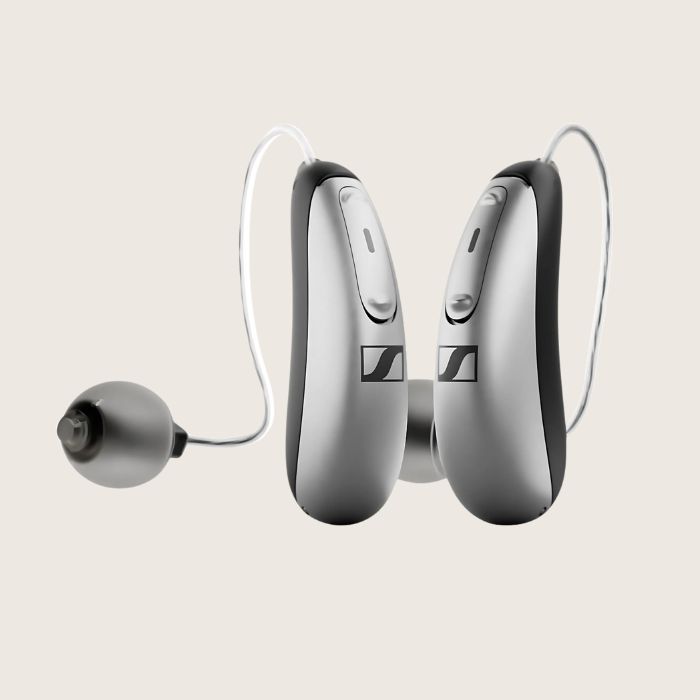
Sennheiser All Day Clear
Sennheiser All Day Clear
- Our favorite OTC hearing aids for under $1,000
- Manufactured by the largest hearing aid maker in the world
- Compatible with iPhone and Android devices
Sennheiser All Day Clear is our top-selling and best-rated OTC hearing aid at Soundly.com. We’ve tested this product extensively—in the audiology test box, in real-world noisy environments, and through thousands of Soundly customer experiences in 2025.
Soundly offers a complimentary setup call with every purchase — a helpful perk for customers and a valuable way for us to hear firsthand which products are performing best.
At-Home Delivery
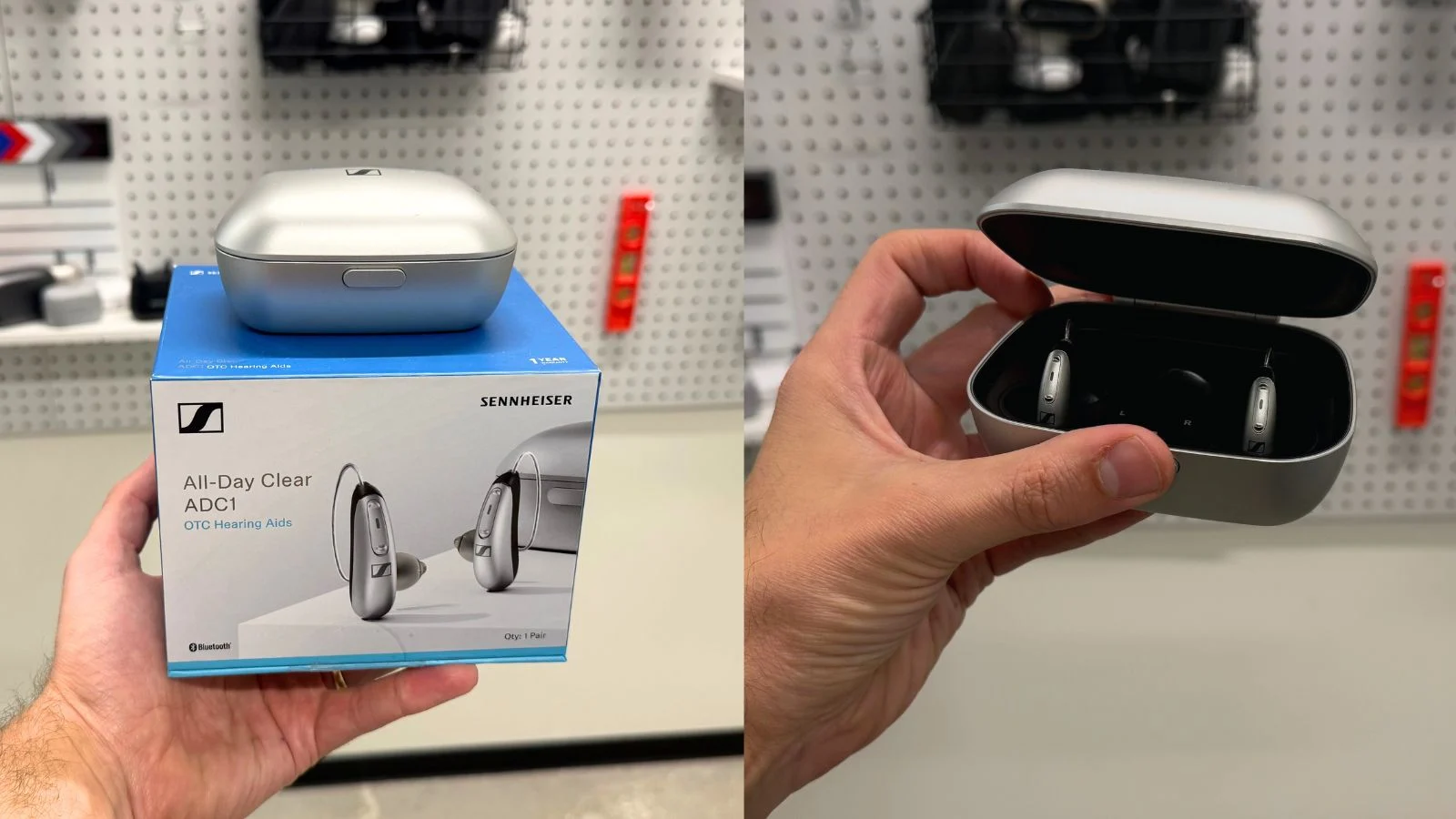
Sennheiser All Day Clear is made by Sonova, the world’s leading hearing aid manufacturer. Unlike traditional in-clinic devices that average around $5,000 a pair, All Day Clear ships directly to your home (Soundly offers free 2-day shipping) and lists for $999 per pair.
Rechargeable with Bluetooth
These hearing aids deliver 18–20 hours of battery life on a single charge and offer reliable call and music streaming for both iPhone and Android users. Thanks to Sonova’s Bluetooth Classic connection, pairing is easier than most OTC devices—especially for Android users.
App Programming
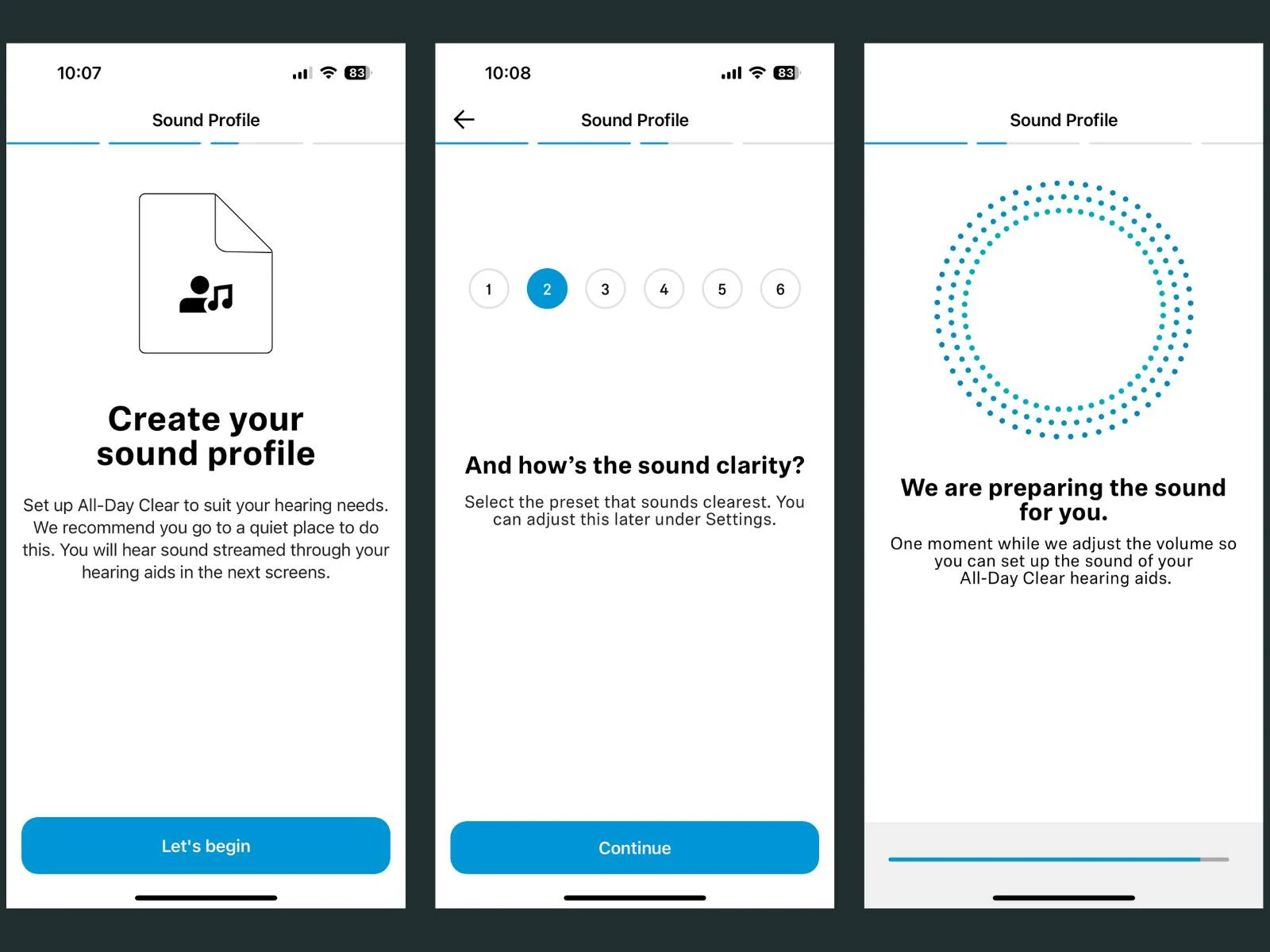
As a self-fitting product, All Day Clear uses a smartphone app to adjust the hearing aids to your specific hearing loss. The app isn’t the most feature-rich on the market, but in our testing (and from what we hear from customers), it’s the easiest to set up and navigate.
Sound Quality
Likely your biggest question: how do they sound? In short—excellent. You can hear Sonova’s signature processing in these devices. They handle sudden sounds, wind, feedback, and background noise in a way we’d consider market-leading for OTC self-fitting hearing aids.
Notes & Watchouts
- Best suited for mild-to-moderate hearing loss. If your loss is more significant or complex, in-clinic care is still the right move. Take our hearing test to better understand your loss.
- The charger must be plugged into the wall while in use. A separate power pack is available if you want mobile charging.
Bottom line: Sennheiser All Day Clear sits at the top of our list for self-fitting OTC hearing aids. It delivers great sound, simple control, and strong value from a world-class manufacturer.
- Premium Sonova-built technology for less than prescription channels
- Bluetooth streaming and hands-free calls (Android and iPhone)
- Comfortable all-day form factor
- Charger must be plugged in while charging
- Requires a smartphone for programming
- All-Day Clear is an OTC product appropriate for mild-moderate hearing loss levels
- If you have more significant hearing loss you might consider local or Telehealth care. Read more about prescription Vs. OTC hearing aids here
- Available for purchase online via Soundly
- Does not require a prescription from a doctor
- Customize your hearing aids with the Sennheiser All-Day Clear app
- Soundly customers get a complimentary guided setup session
- Sennheiser offers impressive underlying background noise management technology
- We found this product performed at a similar level to top prescription brands
- Comfortable receiver-in-canal style is great for all day wear
- Sits behind the ear with a receiver (speaker) that reaches into the ear canal
- The form factor of Sennheiser All-Day Clear is comparable to leading prescription hearing aids like Phonak Lumity
- Available in a dual-tone black and silver
- Choose between slim and non-slim versions (we recommend the non-slim option for most people)
- Sennheiser All-Day Clear comes with rechargeable batteries
- 16 hours of wear on a single charge
- Recharge case must be plugged into the wall while in use
- All-Day Clear streams to all devices including iPhone and Android
- All Day Clear allows hands free phone calls on both iPhone and Android
- Streaming quality is similar to the top prescription products on the market
- All-Day Clear is reasonably easy to handle but does require the wearer to place the hearing aid behind their ear and insert the receiver into the ear (consistent across all behind-the-ear styles)
- The All-Day Clear recharge case has ports that must be in contact for charging. This type of charger is more difficult than premium conduction chargers which do not require ports to be touching
- Sennheiser All-Day Clear hearing aids have an IP68 rating
- These devices can be submerged in up to one meter of water for 30 minutes without damage
- The Sennheiser All-Day Clear app enables setup and customization of your hearing aids
- The smartphone app allows on-the-go volume and sound quality adjustments
- The All-Day Clear app has a music and automatic program but does not offer Tinnitus masking, program creation or other advanced features
Side-by-side comparison of affordable hearing aid options. 👇
What Drives Hearing Aid Prices?
Why are hearing aids so much pricier than other consumer tech? After all, you can pick up a pair of headphones for $30 or $40—why not hearing aids? The answer boils down to two key factors: service costs and research and development.
Service
The biggest driver of high prices for prescription hearing aids is the cost of in-person care. When you purchase hearing aids through a clinic, you’re not just paying for the devices—you’re covering the costs of the audiologist’s time, the front desk staff, the clinic’s rent, electricity, and other overhead expenses. These costs add up, driving the average price of prescription hearing aids to around $4,500 per pair.
Here's a breakdown of typical hearing aid prices by care model:
- Lesser-known OTC brands: $100–$500 per pair.
- Brand-name OTC hearing aids (e.g., Sony, Sennheiser): $800–$1,000 per pair.
- Prescription hearing aids (purchased through a local clinic): $3,000–$7,000 per pair.
R&D Costs
The second factor is R&D. Hearing aid manufacturers invest millions each year to develop new technology that makes sound more natural and reduces background noise. This ongoing innovation ensures high-quality hearing aids but also raises costs. While there’s plenty of healthy debate about manufacturer margins, the fact remains: top-tier hearing technology costs more than simpler products like headphones or even cell phones.
Thankfully, for those with mild to moderate hearing loss, the new over-the-counter (OTC) model provides a more affordable option. Products like the Elehear Beyond offer specialized features at consumer-tech-level pricing, making quality hearing care more accessible than ever.
OTC vs. Prescription Hearing Aids: What’s the Difference?
Unfortunately, most insurance plans do not cover hearing aids and when they do they typically offer a "discount" instead of a cash benefit. That means those seeking in-person care at a local clinic should be prepared to spend at least $2,500 on their hearing care.
This is where OTC hearing aids come in. OTC devices, which officially became available in late 2022, offer audiology-grade technology at a much lower price. However, they are only suitable for people with mild to moderate hearing loss. If you’re unsure about your hearing level, you can take our hearing test to get a better idea and watch the video below to understand your results.
What if I need prescription care?
If you have severe or profound hearing loss, prescription hearing aids may be recommended. Soundly can help you take the next step by connecting you to care:
1. Request an appointment through Soundly and get matched with a licensed hearing care professional
2. Soundly will help you find convenient, local care through Soundly’s nationwide network of 6,500+ providers
3. Take a no‑cost online hearing test to better understand your hearing needs before your visit
You can also check your insurance benefits separately to see what hearing coverage may be available through your plan before scheduling care.
Free or Low-Cost Hearing Aid Options
There are several free or low-cost options worth exploring:
- Non-Profit Organizations: Groups like the Hearing Loss Association of America or Lions Club International offer programs to help those in need.
- Government Programs: Medicaid and other state programs may provide coverage for hearing aids.
- Veteran Benefits: Veterans may qualify for hearing aids through the VA.
- Clinical Trials: Participating in clinical trials can sometimes provide access to free hearing aids.
CaptionCall No-Cost Phone Service
For anyone with hearing loss, CaptionCall offers free captioning services for phone calls and provides an amplified phone at no cost. They’ll even bring it to your home and set it up at no cost. Clearly a caption phone is not the same as a pair of hearing aids, but the service can provide some much needed relief. These services are funded by the FCC and require no payment from users.
What to Avoid When Shopping For Affordable Hearing Aids
Every option on this list meets our standards, but here are a few tips to guide your broader search and prevent hearing aid shopping pitfalls.
- Start with a hearing test – Before buying, take a hearing test to understand your level of hearing loss. Whether you use Soundly’s test or get tested locally, it’s important to know if you have mild to moderate hearing loss (ideal for OTC options) or severe to profound loss (which may require prescription care).
- Purchase from a reputable retailer – Buy hearing aids from trusted retailers or directly from well-known brands. We recommend avoiding mass-market platforms like Amazon, where product vetting is minimal, and brands are only required to list their products. If a brand isn’t widely mentioned online or in trusted resources, it’s best to steer clear for now.
- Avoid secondhand purchases – While secondhand options on platforms like eBay may seem tempting, they often come with risks such as voided warranties or questionable origins. It’s best to purchase new hearing aids from verified sources.
If you’re unsure where to start, reach out to us at hello@soundly.com or text/call us at 1-833-SOUNDLY. We’re happy to review your hearing test and help you explore the best options for your needs.
Final Thoughts
If you’ve made it this far, you now have a solid understanding of what drives hearing aid prices, the options available on the market, and how your unique hearing needs play a role in finding the right product.
The good news? It’s an exciting time for hearing aid wearers seeking affordable solutions. Just a few years ago, many of the options on this list simply didn’t exist. Today, you can access audiology-grade sound at a fraction of the cost you would have paid in 2020.
That said, the market can still feel overwhelming. If you have questions or need support, don’t hesitate to reach out to us. We’re here to help guide you every step of the way. Thank you for reading, and we hope this guide has made your journey a little clearer.


